
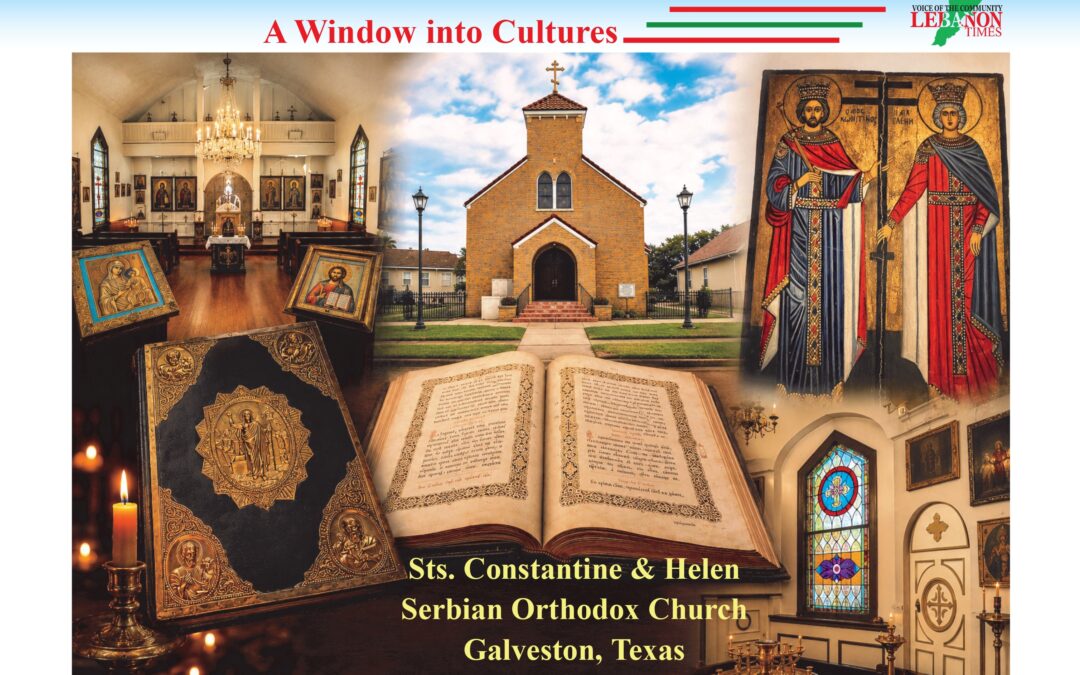
In the coastal city of Galveston, where ships once carried immigrants and their dreams toward a new world, stands a religious landmark that represents far more than stone and walls. It is a living witness to faith, immigration, diversity, and history.
Founded officially in 1895, Sts. Constantine and Helen Serbian Orthodox Church became the oldest Orthodox church in the State of Texas and one of the most significant spiritual landmarks in the history of the American South.
- The Beginning of the Story
In the late nineteenth century, Orthodox families from different regions — including the Balkans, Eastern Europe, and the Eastern Mediterranean — arrived in Galveston seeking new opportunities and a better life. Yet they carried with them something far more valuable than money or belongings: their faith and their roots.
As the community grew, so did the need for a church that could unite them, preserve their prayers and traditions, and offer their children a spiritual connection in a new land.
Building the church was not easy in those early days. The community relied on modest donations and personal sacrifices, but with deep faith and determination, they succeeded in creating this spiritual home. Over the years, the church became not only a place of worship, but also a center for preserving language, customs, and traditions for future generations.
- Support from the Russian Tsar
Church records indicate that the parish received personal support from the last Tsar of Imperial Russia, Nicholas II of Russia, to whom the following words are attributed:
“Let there be an Orthodox Church in Galveston.”
This support was more than financial assistance. It reflected the importance of caring for Orthodox
communities scattered around the world and maintaining their spiritual connection with their mother churches.
- The Imperial Gospel… A Piece of History
Today, the church houses valuable historic icons and rare religious artifacts, including a Gospel book gifted by Tsar Nicholas II himself, reflecting the spiritual ties among Orthodox churches worldwide.
This Gospel remains one of the church’s most treasured spiritual and historical possessions.
During my visit, seeing this Gospel up close was especially moving. It was remarkable to reflect on how it traveled from the halls of Imperial Russia to a church in Texas, remaining a witness to an entire era of faith and global church connections.
- A Multicultural Church from the Beginning
What makes this church especially unique is that it was never built to serve only one ethnic group. From its earliest days, it welcomed believers from diverse backgrounds who gathered together under one roof.
In many ways, the church was ahead of its time — an early example of unity in diversity, a principle that today defines major cities such as Houston.
- A Meeting with the Priest and the Spirit of the Place
During the visit, it became clear that the church does not live only through memories of the past. It continues to thrive through its parish, its faithful community, and the priest who carries on its mission with warmth and dedication while preserving the spiritual and historical legacy of this remarkable place.
- More Than a Church
This church is not merely a historic building. It is the story of people who crossed oceans, held tightly to their faith, and built a spiritual home that still stands strong more than 130 years later.
It is a beautiful reminder that roots can extend far beyond borders, and that civilization is measured not by size, but by the legacy it leaves behind.
- Conclusion
In a time when cities and identities change rapidly, Sts. Constantine and Helen Serbian Orthodox Church remains a living testimony that true faith can cross oceans and generations, bringing people together around roots that never die.