
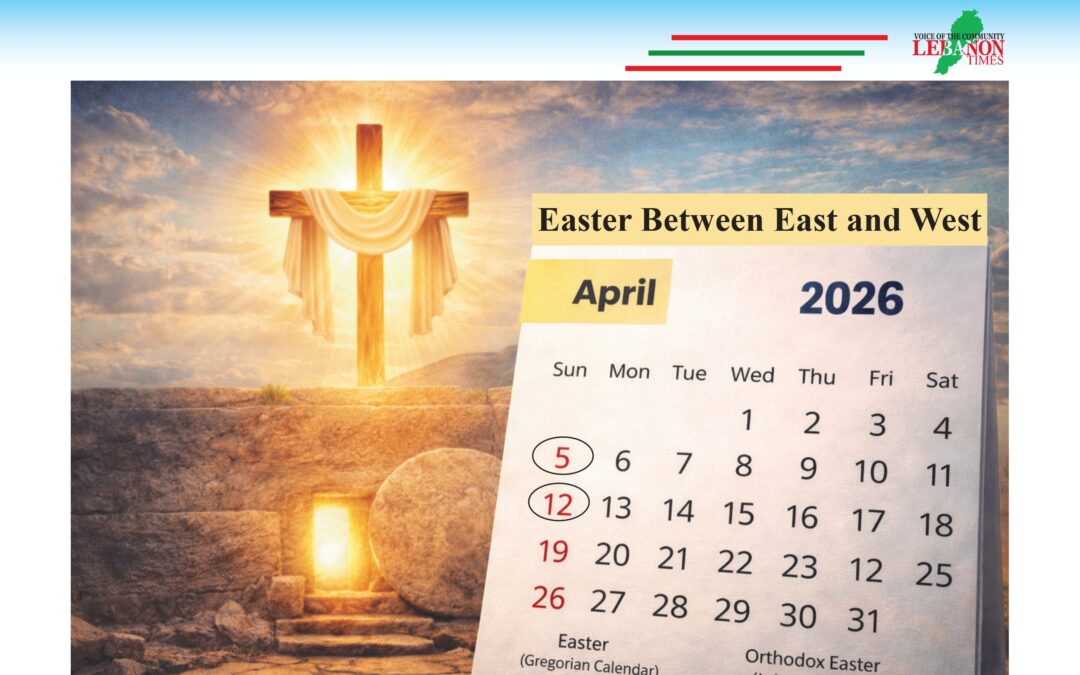
Lebanon Times remains committed to highlighting cultural and religious topics that matter to its readers and help foster a deeper understanding of the diverse traditions among different communities. In a multicultural city like Houston—where various cultures and faiths coexist—questions naturally arise and are often heard.
Among these common questions is one frequently asked about Easter: Why do Christians celebrate this holiday on different dates? Sometimes, it is even jokingly said that Christians “crucify and resurrect Christ twice.”
This notion, however, is simply a misunderstanding resulting from the different dates observed by some churches. For this reason, Lebanon Times sheds light on this topic to explain the real reason behind the differences in Easter celebrations among Christian churches.
- Why Does the Date of Easter Differ?
Easter is one of the most important feasts in Christianity, commemorating the Resurrection of Jesus Christ after His crucifixion. Although all Christian churches celebrate the same
event, the date of Easter may vary from year to year between Eastern and Western traditions.
The reason lies in how the date is calculated and which calendar is used.
In 325 AD, Church leaders gathered at what became known as the Council of Nicaea and agreed on a rule to determine the date of Easter. It was decided that Easter would fall on the Sunday following the first full moon after the spring equinox.
However, over the centuries, differences emerged in the calendars used to calculate this date.
Western churches—such as the Catholic Church and most Protestant denominations—today follow the Gregorian calendar, which is the standard calendar used in most countries around the world.
Meanwhile, many Eastern Orthodox churches continue to calculate Easter based on the older Julian calendar, which differs from the modern calendar by several days.
This difference in calculation sometimes leads to different celebration dates between East and West, with some churches observing Easter a week or more later.
- Sometimes the Dates Align
Despite these differences, there are years when both calculations coincide, and all Christians celebrate Easter on the same day. This is often a joyful occasion, as it reflects unity in meaning and celebration.
- One Message of Easter
Regardless of the differing dates, Easter remains, for Christians in both East and West, one unified message:
A message of hope, new life, and victory over death.
The difference in celebration dates does not change the essence of the feast; rather, it reflects the richness and diversity of church traditions that have developed throughout the centuries.